AI in Game Development: 5 Studios Adapting for 2026 Releases
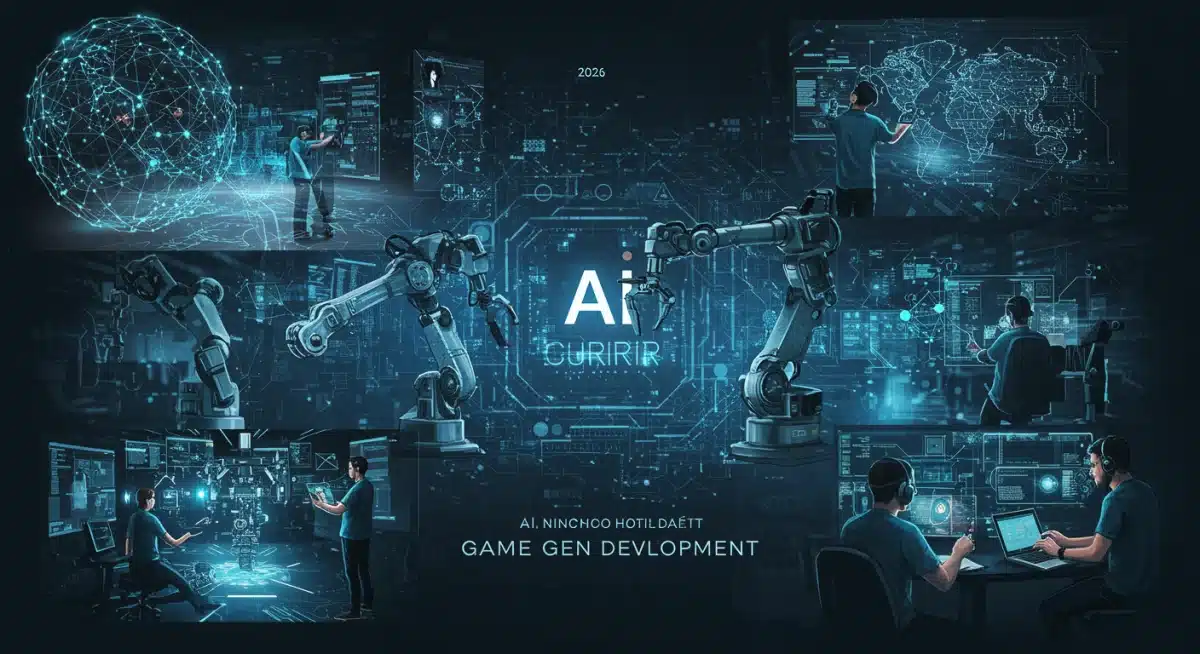
The gaming industry stands on the precipice of a new era, largely driven by the relentless march of artificial intelligence. As we hurtle towards 2026, the traditional paradigms of game development are being reshaped, with AI emerging as a pivotal force. The integration of advanced AI is no longer a futuristic concept but a present-day reality, influencing everything from conceptual design to post-launch optimization. This comprehensive exploration delves into how five prominent game studios are not just embracing but actively pioneering the use of AI game development to craft their highly anticipated 2026 releases, setting new benchmarks for innovation, efficiency, and player engagement.
The landscape of game creation is inherently complex, demanding immense resources, time, and creative ingenuity. Historically, many aspects of this process were manual, repetitive, and often bottlenecked by human limitations. However, AI offers a transformative solution, promising to automate mundane tasks, accelerate content generation, enhance realism, and even personalize player experiences on an unprecedented scale. This shift is not merely about making games faster; it’s about making them smarter, more immersive, and ultimately, more captivating.
Our journey will uncover the diverse strategies employed by these leading studios. We will examine how they are leveraging AI for procedural content generation, intelligent NPC behavior, dynamic storytelling, sophisticated testing, and even personalized difficulty adjustments. Each studio, with its unique vision and technological prowess, offers a distinct perspective on the future of gaming, demonstrating the multifaceted impact of AI game development on their upcoming projects. By dissecting their approaches, we aim to provide a holistic view of the exciting innovations that await players in 2026 and beyond.
The Dawn of AI in Game Development: A Paradigm Shift
For decades, game development has been a blend of art and science, requiring vast teams of artists, programmers, designers, and writers to meticulously craft virtual worlds. The introduction of Artificial Intelligence into this intricate process marks a significant paradigm shift. No longer confined to simple pathfinding or enemy logic, AI is now being deployed in sophisticated ways that promise to revolutionize every facet of game creation. This evolution is particularly evident as studios gear up for their 2026 releases, where the competitive edge will increasingly belong to those who master AI game development.
Redefining Content Creation with AI
One of the most immediate and impactful applications of AI in gaming is in content creation. Procedural generation, while not new, has been supercharged by AI, allowing for the creation of vast, diverse, and coherent game worlds with unprecedented efficiency. Imagine entire planets, intricate dungeons, or bustling cities generated not by hand, but by intelligent algorithms that understand design principles, environmental coherence, and player expectations. This capability significantly reduces development time and costs, freeing human developers to focus on higher-level creative tasks.
Beyond landscapes, AI is also proving instrumental in generating assets like textures, 3D models, and even character animations. Generative Adversarial Networks (GANs) and other deep learning techniques can produce high-quality visual and audio content, adhering to specific artistic styles and technical specifications. This not only speeds up the art pipeline but also opens up possibilities for greater variation and customization within games, leading to richer and more dynamic player experiences.
Intelligent NPCs and Dynamic Storytelling
The heart of many compelling games lies in their characters and narratives. AI is transforming non-player characters (NPCs) from predictable automatons into believable, adaptive entities. Advanced AI models can enable NPCs to exhibit more sophisticated behaviors, learn from player actions, and even engage in dynamic conversations. This leads to more immersive interactions and a greater sense of agency for the player.
Furthermore, AI is beginning to influence dynamic storytelling. Instead of rigid, pre-scripted narratives, AI can create branching storylines, adapt quests based on player choices, and even generate unique narrative elements on the fly. This level of responsiveness ensures that each playthrough can offer a fresh and personalized experience, a significant leap forward for replayability and player engagement. Studios focusing on AI game development for their 2026 titles are keenly exploring these avenues to deliver unparalleled narrative depth.
Studio Spotlight: 5 Innovators in AI Game Development for 2026
Let’s dive into some specific examples of how leading game studios are leveraging AI to shape their upcoming 2026 releases. Each studio represents a different facet of AI game development, showcasing the breadth of its application.
1. Quantum Dynamics: Hyper-Realistic Worlds and Adaptive AI
Quantum Dynamics, renowned for its visually stunning open-world titles, is pushing the boundaries of realism with AI. For their unnamed 2026 project, they are employing a proprietary AI engine focused on hyper-realistic environmental generation. This engine uses machine learning to analyze vast datasets of real-world geographical and ecological information, generating landscapes that are not only breathtaking but also biologically and geologically coherent. The AI understands natural erosion patterns, vegetation distribution, and even weather system impacts, creating a living, breathing world that feels genuinely authentic.
Beyond environments, Quantum Dynamics is also integrating advanced adaptive AI for its wildlife and enemy factions. NPCs in their game will exhibit complex emergent behaviors, learning from player tactics and adapting their strategies in real-time. This means that a stealth approach might work once, but the AI will remember and implement countermeasures, forcing players to constantly evolve their play style. This dynamic challenge is a core tenet of their AI game development philosophy, aiming for unparalleled player immersion and replayability.
2. Narrative Forge: Personalized Storytelling with Generative AI
Narrative Forge, a studio celebrated for its rich, character-driven narratives, is revolutionizing storytelling with generative AI for its 2026 RPG. Their innovative system, dubbed ‘ChronoWeaver,’ uses large language models (LLMs) and advanced AI planners to construct unique questlines and character interactions based on player decisions and the game’s evolving world state. Every conversation, every choice, feeds into the AI, which then subtly alters future events, NPC reactions, and even the overarching narrative arc.
This approach moves beyond simple branching paths, creating a truly emergent narrative where no two players will experience the exact same story. The AI can generate new dialogue, side quests, and even minor characters on the fly, ensuring that the world feels alive and responsive to the player’s presence. Narrative Forge believes that this deep level of personalization, powered by cutting-edge AI game development, will set a new standard for player agency and emotional connection in their upcoming title.
3. PixelCraft Labs: AI-Assisted Level Design and Optimization
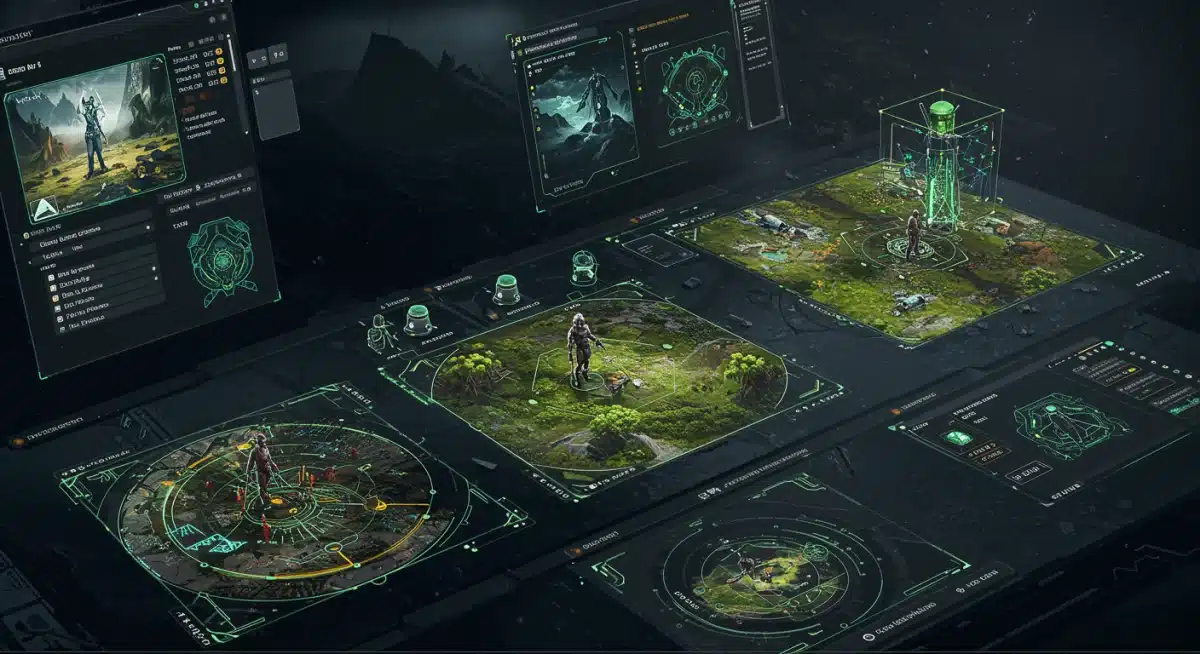
PixelCraft Labs, known for its intricate puzzle and strategy games, is harnessing AI to streamline its level design process and optimize game performance for its 2026 release. Their AI tools allow designers to rapidly prototype complex levels, with the AI suggesting optimal placements for objectives, obstacles, and enemy encounters based on predefined parameters and player data from previous titles. This significantly reduces the iteration cycle, enabling designers to experiment with more creative concepts.
Furthermore, PixelCraft Labs is using AI for extensive game optimization. Their AI system continuously analyzes gameplay data, identifying performance bottlenecks, balancing issues, and potential exploits long before human testers can. This proactive approach to quality assurance ensures a smoother, more polished experience at launch. Their focus on efficient AI game development in these areas means faster development cycles and higher quality output.
4. Synthwave Games: Dynamic Audio and Music Generation
Synthwave Games, an indie studio gaining traction for its atmospheric titles, is pushing the envelope with AI-driven audio experiences in their 2026 horror-thriller. Their AI composer, ‘Auralis,’ generates dynamic soundtracks and ambient soundscapes that adapt in real-time to player actions, environmental changes, and narrative tension. Instead of pre-recorded loops, Auralis creates unique musical passages and sound effects that heighten suspense, emphasize key moments, and immerse the player deeper into the game world.
This innovative use of generative AI for audio means that the game’s sound design is never static or repetitive. The AI can respond to subtle cues, such as a player’s heart rate (if biometric data is available and opted-in), proximity to threats, or even their current emotional state within the game, to craft a truly personalized sonic experience. Synthwave Games believes this sophisticated AI game development approach to audio will amplify the psychological impact of their upcoming title.
5. Global Gamers Collective: AI for Enhanced Accessibility and Player Support
Global Gamers Collective, a large studio with a focus on community and accessibility, is leveraging AI to make their 2026 multiplayer title enjoyable for a wider audience. They are implementing AI-powered accessibility features, such as adaptive difficulty scaling that intelligently adjusts challenges based on individual player performance and preferences. This ensures that both seasoned veterans and new players can find an appropriate level of engagement without feeling overwhelmed or unchallenged.
Moreover, the Collective is deploying AI chatbots and virtual assistants for enhanced player support. These AI agents can answer common questions, troubleshoot minor issues, and guide players through complex mechanics, reducing the burden on human support staff and providing instant assistance. This commitment to inclusive AI game development ensures that their games are not only fun but also accessible and supported for everyone.
Challenges and Considerations in AI Game Development
While the promises of AI game development are vast, its implementation is not without challenges. Studios must navigate complex ethical considerations, technical hurdles, and the need to maintain human creative oversight. The goal is not to replace human talent but to augment it, empowering developers to achieve more ambitious visions.
Ethical Implications and Bias
As AI becomes more integral, ethical questions arise. How do studios ensure AI-generated content is free from biases present in its training data? How do they handle player data responsibly when AI is personalizing experiences? Transparency and careful data governance are crucial. Studios must commit to developing AI responsibly, ensuring fairness and avoiding unintended negative consequences for players.
Technical Hurdles and Resource Demands
Implementing advanced AI, especially generative models and complex adaptive systems, requires significant computational power and specialized expertise. Training sophisticated AI models demands vast datasets and powerful hardware. Studios must invest heavily in infrastructure and skilled AI engineers to effectively integrate these technologies. Optimizing AI performance within game engines without sacrificing frame rates or increasing load times is a constant balancing act.
Maintaining Creative Control and Artistic Vision
One of the primary concerns is ensuring that AI serves the artistic vision of the game, rather than dictating it. Developers must carefully design AI systems to act as tools that enhance creativity, not stifle it. The human element of design, narrative, and aesthetic appeal remains paramount. The challenge lies in striking the right balance between AI automation and human artistic direction, ensuring that the unique voice of the studio shines through.
The Future of Gaming: Beyond 2026 with AI
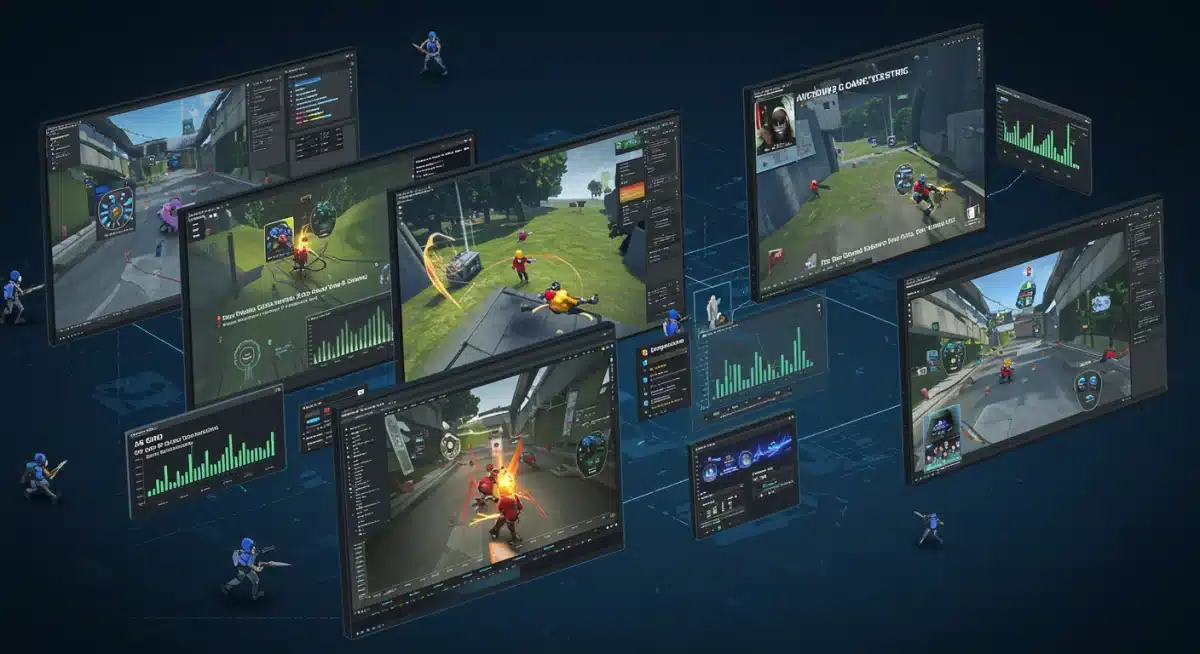
The innovations we see today in AI game development for 2026 releases are just the beginning. The trajectory suggests an even more deeply integrated and transformative role for AI in the years to come. We can anticipate games that are not just adaptive but truly sentient, capable of learning and evolving alongside their players in unprecedented ways.
Hyper-Personalized Experiences
Imagine games that understand your playstyle, preferences, and even emotional responses so intimately that they can tailor every aspect of the experience – from narrative beats and character arcs to environmental challenges and musical scores – to your unique tastes. AI will move beyond simple difficulty scaling to create truly bespoke adventures for every player, making each game feel uniquely designed for them.
Autonomous Game Worlds
The concept of a truly autonomous game world, where NPCs live out their lives, factions vie for power, and ecosystems evolve independently of direct player intervention, could become a reality. AI could manage the complex interactions of these systems, creating a persistent, dynamic world that offers infinite possibilities and emergent narratives, even when the player is offline.
AI as a Creative Partner
Looking further ahead, AI might evolve from a tool into a genuine creative partner. Imagine collaborating with an AI to brainstorm game concepts, design intricate mechanics, or even co-write compelling stories. This partnership could unlock new levels of creativity and efficiency, allowing smaller teams to produce games of unprecedented scope and depth.
Conclusion: AI Paving the Way for Gaming’s Next Frontier
The integration of AI into game development is not merely an incremental improvement; it is a fundamental shift that is redefining what is possible in interactive entertainment. As the five studios highlighted demonstrate, AI game development is enabling the creation of more immersive, dynamic, and personalized experiences for their 2026 releases. From hyper-realistic worlds and adaptive NPCs to personalized narratives and intelligent optimization, AI is empowering developers to craft games that are richer, more responsive, and more engaging than ever before.
While challenges remain, the industry’s commitment to responsible and innovative AI integration promises a future where games are not just played but truly lived. The ongoing evolution of AI will continue to push creative boundaries, streamline development processes, and ultimately deliver unforgettable experiences to players worldwide. The year 2026 will serve as a significant milestone, showcasing the tangible results of this technological revolution and paving the way for the next frontier of gaming.
The journey of AI game development is an exciting one, filled with potential and innovation. As these studios and many others continue to explore and expand the capabilities of artificial intelligence, we can only anticipate even more groundbreaking advancements that will forever change the way we play, create, and experience video games.