Future of Vocational Training: Top 6 In-Demand Trades in the US (2026+)
The Future of Vocational Training: 6 In-Demand Trades in the US for 2026 and Beyond
In an ever-evolving global economy, the demand for skilled labor continues to grow, making vocational training a cornerstone of future career success. As we look towards 2026 and beyond, certain trades are poised for significant expansion, driven by technological advancements, infrastructural needs, and shifting societal priorities. This comprehensive guide will explore the landscape of vocational training in the United States, highlighting the top 6 in-demand vocational trades that promise robust career opportunities and substantial earning potential. Understanding these trends is crucial for students, career changers, and educational institutions looking to invest in the skills of tomorrow.
The perception of vocational training has undergone a remarkable transformation. Once seen as a secondary option to traditional four-year degrees, skilled trades are now recognized as vital contributors to the economy, offering direct pathways to stable, well-paying jobs without the burden of extensive student loan debt. The COVID-19 pandemic further underscored the essential nature of many skilled trades, as these professionals continued to work, maintaining critical infrastructure and services. As industries adapt to new technologies and environmental challenges, the need for specialized hands-on expertise will only intensify, cementing the role of in-demand vocational trades as key drivers of innovation and progress.
This article will delve into the specifics of each trade, discussing the skills required, the typical training paths, job outlook, and potential earnings. We will also touch upon the broader implications of these trends for the American workforce and educational system, emphasizing the importance of accessible and high-quality vocational programs. Whether you’re a high school student contemplating your next steps, an adult seeking a career change, or an educator shaping future curricula, this insights will provide valuable guidance on navigating the promising world of vocational careers.
Understanding the Shifting Landscape of the US Job Market
The United States job market is a dynamic entity, constantly reshaped by technological innovation, economic cycles, and demographic shifts. Historically, there has been a strong emphasis on university education as the primary route to professional success. However, a growing skills gap in various sectors has brought the value of vocational training into sharp focus. Businesses are struggling to find qualified individuals for positions that require specialized technical skills, leading to an increased appreciation for vocational education and training (VET) programs.
The skills gap refers to the disparity between the skills employers need and the skills available in the workforce. This gap is particularly pronounced in the skilled trades, where an aging workforce is retiring faster than new talent can be trained. This creates a significant opportunity for individuals entering the workforce or seeking a career change. Vocational schools, community colleges, and apprenticeship programs are stepping up to fill this void, offering targeted training that leads directly to employment.
Technological Advancements and Their Impact on Trades
Far from making manual labor obsolete, technology is transforming many trades, making them more efficient, safer, and often more complex. For instance, HVAC technicians now work with smart home systems and complex digital controls. Electricians are installing electric vehicle charging stations and integrating smart grid technologies. Plumbers are using advanced diagnostic tools for leak detection. This integration of technology means that modern vocational training must equip students not only with traditional hands-on skills but also with digital literacy and problem-solving abilities. The future of in-demand vocational trades is intrinsically linked to technological adoption.
Economic Resilience of Skilled Trades
During economic downturns, jobs in skilled trades often prove to be more resilient than those in other sectors. Essential services, such as maintaining infrastructure, repairing critical systems, and providing healthcare support, remain crucial regardless of economic conditions. This inherent stability makes vocational careers an attractive option for those seeking long-term job security. The demand for these services is not temporary; it is a fundamental requirement for a functioning society.
Top 6 In-Demand Vocational Trades for 2026 and Beyond
Based on projections from the Bureau of Labor Statistics (BLS), industry reports, and current market trends, the following six vocational trades are expected to experience significant growth and demand in the coming years. These fields offer excellent opportunities for individuals seeking rewarding and stable careers.
1. HVAC Technicians (Heating, Ventilation, Air Conditioning, and Refrigeration)
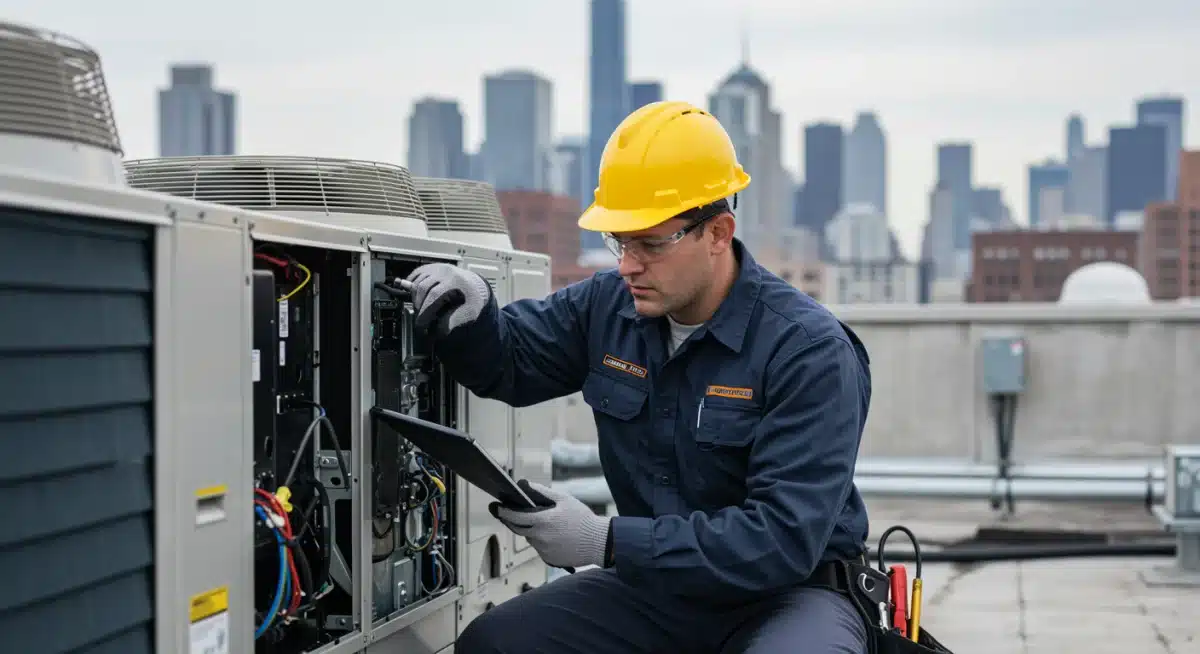
The HVAC industry is a perennial source of employment, and its importance is only set to increase. With a growing population, more extreme weather patterns, and an increasing focus on energy efficiency, the demand for skilled HVAC technicians is consistently high. These professionals install, maintain, and repair heating, ventilation, air conditioning, and refrigeration systems in residential, commercial, and industrial settings. Modern HVAC systems are becoming increasingly complex, integrating smart technology, geothermal systems, and advanced refrigerants, requiring technicians to have a blend of mechanical aptitude and digital skills.
- Skills Required: Mechanical aptitude, problem-solving, diagnostic skills, knowledge of electrical systems, customer service, and understanding of blueprints and technical manuals.
- Training Path: Vocational schools, community colleges, and apprenticeship programs typically offer certificates or associate’s degrees in HVAC technology, ranging from 6 months to 2 years. Certifications like EPA Section 608 are often required.
- Job Outlook (BLS): Expected to grow 5% from 2022 to 2032, about as fast as the average for all occupations, with approximately 40,100 new jobs projected. This growth is driven by new construction and the need to maintain and upgrade existing systems.
- Average Salary (BLS): The median annual wage for HVAC and refrigeration mechanics and installers was $59,620 in May 2022.
2. Renewable Energy Technicians (Solar and Wind)
As the world shifts towards sustainable energy sources, the renewable energy sector is experiencing explosive growth. Solar photovoltaic (PV) installers and wind turbine technicians are at the forefront of this revolution. Government incentives, falling technology costs, and increasing environmental awareness are fueling the demand for these specialists. These roles involve installing, inspecting, maintaining, and repairing renewable energy systems that harness power from the sun and wind.
Solar Photovoltaic Installers
- Skills Required: Mechanical and electrical aptitude, physical stamina, comfort working at heights, understanding of safety protocols, and knowledge of solar panel installation techniques.
- Training Path: Most learn through on-the-job training, but vocational schools and community colleges offer programs in solar energy technology. Certifications from organizations like the North American Board of Certified Energy Practitioners (NABCEP) are highly valued.
- Job Outlook (BLS): Projected to grow 12% from 2022 to 2032, much faster than the average for all occupations, with about 5,600 new jobs.
- Average Salary (BLS): The median annual wage for solar photovoltaic installers was $47,670 in May 2022.
Wind Turbine Technicians
- Skills Required: Strong mechanical and electrical skills, ability to work at extreme heights and in confined spaces, diagnostic capabilities, and adherence to strict safety standards.
- Training Path: Technical school programs focusing on wind energy technology are common, often leading to an associate’s degree. Apprenticeships are also available.
- Job Outlook (BLS): Expected to grow 45% from 2022 to 2032, much faster than the average for all occupations, with about 4,000 new jobs. This is one of the fastest-growing occupations.
- Average Salary (BLS): The median annual wage for wind turbine technicians was $57,320 in May 2022.
3. Cybersecurity Specialists/Technicians
In our increasingly digital world, cybersecurity is no longer a niche concern but a critical imperative for businesses, governments, and individuals. The constant threat of cyberattacks means that skilled cybersecurity professionals are in extremely high demand across all sectors. While some roles require a bachelor’s degree, many entry-level and specialized technician roles can be accessed through vocational training, certifications, and associate’s degrees. These professionals protect computer systems and networks from threats, monitor for breaches, and respond to security incidents.
- Skills Required: Strong analytical and problem-solving skills, understanding of network protocols and operating systems, knowledge of security software and hardware, attention to detail, and ethical hacking principles.
- Training Path: Vocational programs, associate’s degrees in information technology with a cybersecurity specialization, and industry certifications (e.g., CompTIA Security+, Certified Ethical Hacker (CEH), Cisco CCNA Security) are common entry points.
Federal cybersecurity regulations are also shaping the demand for these roles. - Job Outlook (BLS): Information security analysts, a related field, are projected to grow 32% from 2022 to 2032, much faster than the average for all occupations, with about 53,200 new jobs.
- Average Salary (BLS): The median annual wage for information security analysts was $112,000 in May 2022. Vocational entry-level technician roles would typically start lower but offer significant growth potential.

4. Medical Technicians/Assistants
The healthcare industry is consistently one of the largest and fastest-growing sectors in the US economy. An aging population and advances in medical technology ensure a continuous demand for skilled healthcare support staff. While doctors and nurses require extensive university education, many critical roles, such as medical assistants, phlebotomists, and surgical technologists, can be entered through vocational training programs. These professionals perform vital diagnostic tests, assist medical practitioners, and ensure the smooth operation of healthcare facilities.
Medical Assistants
- Skills Required: Clinical skills (e.g., taking vital signs, administering injections), administrative skills (e.g., scheduling, billing), strong communication, empathy, and attention to detail.
- Training Path: Vocational schools and community colleges offer certificate or diploma programs, typically lasting 9 months to a year. Certification is often preferred by employers.
- Job Outlook (BLS): Projected to grow 14% from 2022 to 2032, much faster than the average for all occupations, with about 105,900 new jobs.
- Average Salary (BLS): The median annual wage for medical assistants was $38,270 in May 2022.
Surgical Technologists
- Skills Required: Knowledge of surgical procedures, sterile technique, ability to anticipate surgeon’s needs, strong attention to detail, and emotional resilience.
- Training Path: Postsecondary nondegree programs or associate’s degree programs, lasting from 9 months to 2 years. Certification is usually required.
- Job Outlook (BLS): Expected to grow 5% from 2022 to 2032, about as fast as the average for all occupations, with about 5,000 new jobs.
- Average Salary (BLS): The median annual wage for surgical technologists was $56,350 in May 2022.
5. Electricians
Electricians are indispensable to modern society, responsible for installing, maintaining, and repairing electrical power, communications, lighting, and control systems in homes, businesses, and factories. The demand for electricians remains robust, driven by new construction, infrastructure upgrades, and the increasing complexity of electrical systems, including smart home integration and the expansion of electric vehicle (EV) charging infrastructure. The expertise of an electrician is a foundational in-demand vocational trade.
- Skills Required: Strong understanding of electrical theory and codes, manual dexterity, problem-solving skills, attention to safety, and ability to read blueprints.
- Training Path: Most electricians learn through apprenticeships, which combine on-the-job training with technical instruction, lasting 4-5 years. Vocational schools also offer pre-apprenticeship programs. Licensure is required in most states.
- Job Outlook (BLS): Projected to grow 6% from 2022 to 2032, faster than the average for all occupations, with about 46,700 new jobs.
- Average Salary (BLS): The median annual wage for electricians was $60,240 in May 2022.
6. Plumbers, Pipefitters, and Steamfitters
These trades are essential for public health and comfort, installing and repairing water, waste, drainage, and heating systems. Plumbers focus on residential and commercial water systems, while pipefitters and steamfitters work with high-pressure piping systems in industrial settings, often related to power generation or manufacturing. The ongoing need for new construction, maintenance of aging infrastructure, and the implementation of water-saving technologies ensures a steady demand for these skilled professionals.
- Skills Required: Mechanical aptitude, physical strength and stamina, problem-solving, diagnostic abilities, knowledge of building codes, and safety procedures.
- Training Path: Apprenticeships are the most common route, lasting 4-5 years, combining paid on-the-job training with classroom instruction. Some vocational schools offer pre-apprenticeship programs. Licensure is required in most states.
- Job Outlook (BLS): Projected to grow 2% from 2022 to 2032, slower than the average for all occupations, with about 8,000 new jobs. While the percentage growth is lower, the absolute number of jobs remains significant due to the large size of the occupation and the constant need for these services.
- Average Salary (BLS): The median annual wage for plumbers, pipefitters, and steamfitters was $60,090 in May 2022.
The Benefits of Pursuing In-Demand Vocational Trades
Choosing a career in one of these in-demand vocational trades offers numerous advantages that make them highly attractive options for many individuals.
Lower Educational Costs and Less Debt
Vocational training programs are typically shorter and less expensive than four-year university degrees. This translates to lower student loan debt and a faster entry into the workforce, allowing graduates to start earning and saving sooner. Many apprenticeship programs even pay apprentices while they learn, eliminating tuition costs entirely.
High Earning Potential and Job Security
As illustrated by the salary data, many skilled trades offer competitive wages, often surpassing those of some college-educated professionals, especially considering the lower educational investment. Furthermore, the essential nature of these services ensures a high degree of job security, even during economic fluctuations. The demand for these skills is not easily outsourced or automated.
Hands-On Work and Practical Skills
For individuals who prefer hands-on learning and practical application over theoretical study, vocational trades are an ideal fit. These careers offer the satisfaction of seeing tangible results from your work and continuously developing practical skills that are directly applicable to real-world problems. This practical orientation can lead to a deeper sense of accomplishment and career fulfillment.
Direct Path to Employment
Vocational training is specifically designed to prepare students for immediate entry into the workforce. Curricula are often developed in collaboration with industry partners, ensuring that graduates possess the exact skills employers are looking for. Many programs include internships or apprenticeships that provide valuable work experience and often lead directly to job offers upon completion.
Entrepreneurial Opportunities
Many skilled trades offer excellent opportunities for entrepreneurship. After gaining experience, technicians in fields like HVAC, electrical, plumbing, and even renewable energy installation can start their own businesses, becoming independent contractors or creating their own companies. This path offers greater autonomy, flexibility, and the potential for even higher earnings.
Preparing for a Career in In-Demand Vocational Trades
If you’re considering a career in one of these in-demand vocational trades, there are several steps you can take to prepare and maximize your chances of success.
Research and Explore
Take the time to thoroughly research each trade that interests you. Look into the daily tasks, work environment, physical demands, and specific skills required. Informational interviews with professionals already working in these fields can provide invaluable insights.
Gain Relevant Experience
Even before formal training, you can start building relevant experience. This might include taking shop classes in high school, volunteering for related projects, or even pursuing hobbies that involve mechanical or electrical work. Any experience that demonstrates a mechanical aptitude or problem-solving ability will be beneficial.
Choose the Right Training Program
Selecting an accredited and reputable vocational school, community college, or apprenticeship program is crucial. Look for programs with strong industry connections, experienced instructors, up-to-date facilities, and high job placement rates. Inquire about financial aid options, scholarships, and potential employer partnerships.
Obtain Certifications and Licenses
Many trades require specific certifications or licenses to practice legally and safely. These credentials not only demonstrate your competence but also enhance your employability and earning potential. Stay informed about the requirements in your state and chosen field.
Embrace Lifelong Learning
The world of skilled trades is constantly evolving with new technologies, techniques, and regulations. Successful professionals in these fields are committed to lifelong learning, regularly updating their skills through continuing education courses, workshops, and industry conferences. This adaptability ensures long-term career viability.
The Broader Impact on the US Economy and Education
The resurgence of in-demand vocational trades has significant implications for the US economy and its educational system. A robust skilled workforce is critical for national infrastructure, technological advancement, and economic competitiveness. By investing in vocational training, the nation can address critical skills gaps, reduce unemployment, and foster a more resilient and adaptable workforce.
Bridging the Skills Gap
Targeted vocational programs are essential for closing the skills gap in key industries. By aligning training with current and future industry needs, these programs ensure a steady supply of qualified workers, supporting economic growth and innovation. This collaboration between educators and industry is vital for creating relevant and effective curricula.
Promoting Economic Mobility
Vocational training offers a powerful pathway to economic mobility for individuals from diverse backgrounds. It provides accessible, affordable education that leads directly to well-paying jobs, breaking down barriers to entry for many who might not pursue traditional university routes. This inclusivity strengthens the overall workforce and promotes a more equitable society.
Diversifying Educational Pathways
A renewed emphasis on vocational training diversifies the educational landscape, recognizing that not all students thrive in traditional academic settings. By offering a wider range of educational pathways, the system can better serve the varied talents and aspirations of its students, preparing them for success in a multitude of careers.
Conclusion: A Bright Future for Vocational Trades
The future of vocational training in the US is undeniably bright, with a clear and growing demand for skilled professionals across various essential sectors. The 6 in-demand vocational trades discussed – HVAC Technicians, Renewable Energy Technicians, Cybersecurity Specialists, Medical Technicians, Electricians, and Plumbers/Pipefitters/Steamfitters – represent just a snapshot of the many promising career opportunities available. These fields offer not only competitive salaries and excellent job security but also the satisfaction of contributing directly to the welfare and progress of society.
As technology continues to advance and societal needs evolve, the importance of hands-on expertise will only intensify. Vocational training provides a practical, efficient, and cost-effective route to a fulfilling career, empowering individuals to acquire valuable skills that are indispensable in today’s and tomorrow’s job market. For those seeking a stable, rewarding, and impactful career path, investing in vocational training is an intelligent choice that promises significant returns for years to come.
Embrace the opportunities that these in-demand vocational trades present. Research, train diligently, and commit to continuous learning, and you will find yourself well-positioned for a prosperous future in the American workforce.