3-Month Plan: Mastering 2026 SAT/ACT New Formats

Developing a strategic 3-month plan is crucial for students aiming to excel on the 2026 SAT/ACT, as these exams introduce new digital formats and content adaptations demanding a fresh approach to preparation and study techniques.
Are you feeling the pressure of upcoming college admissions and the evolving landscape of standardized testing? The 2026 SAT/ACT prep plan is not just about studying; it’s about strategizing for success in a new era of digital exams. This guide will walk you through a focused 3-month roadmap to confidently tackle the updated formats and achieve your target scores.
Understanding the New 2026 SAT and ACT Formats
Before diving into any preparation, it’s essential to grasp the significant changes coming to both the SAT and ACT by 2026. These aren’t minor tweaks; they represent a fundamental shift in how these tests are administered and what they assess. Being aware of these differences is the first step in formulating an effective study strategy.
The College Board has transitioned the SAT to a fully digital format, offering a more adaptive testing experience. This means the test will adjust in difficulty based on a student’s performance, potentially making it shorter but requiring more focused attention. The ACT, while not fully digital yet across the board, has also introduced digital options and is continually evaluating its structure to remain competitive and relevant.
Key Changes in the Digital SAT
- The digital SAT is shorter, taking approximately two hours instead of three.
- It features adaptive testing, meaning the difficulty of the second module for each section (Reading & Writing, Math) depends on performance in the first.
- Calculators are permitted for the entire Math section.
- Reading passages are shorter, with one question per passage, making it less mentally taxing.
ACT’s Evolving Landscape
While the ACT has offered a digital version for several years in some testing centers, its primary format remains paper-based for most students. However, expect continued emphasis on digital readiness and potential future shifts. The content remains largely consistent, but familiarity with digital interfaces is becoming increasingly valuable.
Understanding these format shifts is paramount. Your preparation must align with the mechanics of the new digital environment, from navigating the interface to managing time effectively within a computerized setting. Ignoring these changes would be a significant oversight in your 2026 SAT/ACT prep plan.
Month 1: Foundation Building and Diagnostic Assessment
The first month of your 3-month preparation journey is all about establishing a strong foundation and accurately assessing your current standing. This initial phase is crucial for identifying strengths and weaknesses, which will then inform the rest of your study plan. Without a clear understanding of where you are, it’s difficult to know where you need to go.
Begin by taking a full-length diagnostic practice test for both the SAT and ACT. It’s important to simulate actual testing conditions as closely as possible, including timing and environment. This isn’t about getting a good score right now; it’s about gaining insights into the test structure and your performance under pressure.
Choosing Your Primary Test
After reviewing your diagnostic scores, you’ll likely see a natural inclination towards one test over the other. Consider which format felt more comfortable and where your scores were higher. While many students take both, focusing primarily on one can lead to more efficient and targeted preparation.
- Analyze diagnostic test results to pinpoint specific areas of weakness.
- Research official College Board and ACT resources for detailed test breakdowns.
- Familiarize yourself with the digital testing platforms through official practice tests.
Once you’ve identified your target test and primary areas for improvement, dedicate the remainder of the first month to reviewing fundamental concepts. For the SAT, this means reinforcing core math skills, grammar rules, and reading comprehension strategies. For the ACT, focus on science reasoning and time management for its faster pace. This foundational work will make subsequent months of practice much more fruitful.
Month 2: Targeted Practice and Strategy Development
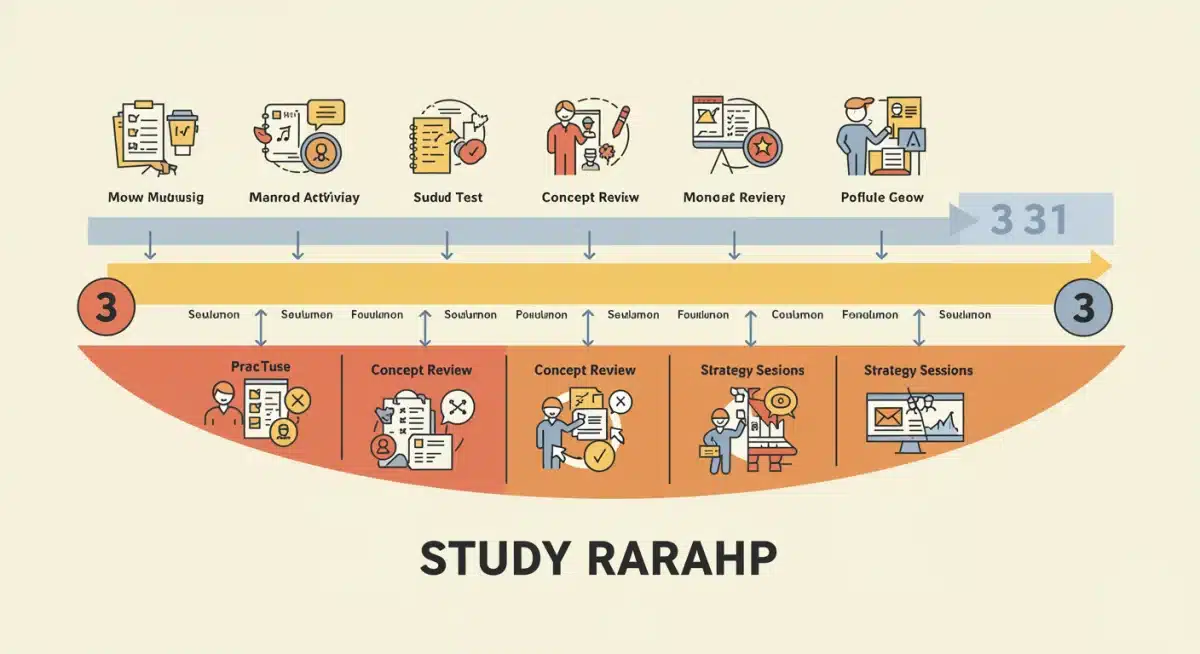
With a solid understanding of your baseline and the test formats, month two shifts its focus to targeted practice and the development of effective test-taking strategies. This is where you begin to actively apply what you’ve learned and refine your approach to different question types. Consistency in practice is key during this period.
Break down the test into individual sections and topics. Instead of just taking full-length tests, dedicate specific study sessions to areas identified as weaknesses in month one. For example, if algebraic equations were a struggle, spend focused time on those types of problems. If reading comprehension was an issue, practice summarizing passages and identifying main ideas.
Developing Section-Specific Strategies
Each section of the SAT and ACT demands a unique strategic approach. For the digital SAT’s adaptive nature, understanding how to manage time within each module is vital. For the ACT, mastering the fast pace of the science section and quickly interpreting data will be crucial.
- Practice timed sections to improve pacing and endurance.
- Learn efficient methods for solving common problem types.
- Experiment with different approaches to reading passages and essay prompts.
- Utilize official practice materials and reputable third-party resources.
Regularly review your practice questions, paying close attention to both correct and incorrect answers. Understanding why you got a question wrong is often more valuable than simply getting it right. Was it a content gap, a misinterpretation of the question, or a timing issue? Adjust your strategies based on these insights. Month two is about building muscle memory and confidence through deliberate, focused effort within your 2026 SAT/ACT prep plan.
Month 3: Full-Length Practice and Refinement
As you enter the final month, the emphasis shifts dramatically to full-length practice tests and fine-tuning your overall approach. This phase is designed to build stamina, simulate the actual test day experience, and eliminate any remaining weaknesses. It’s about bringing all the pieces together and ensuring you’re performing optimally under pressure.
Schedule at least two to three full-length practice tests throughout the month. Take these tests under strict, timed conditions, mirroring the actual exam environment as closely as possible. This includes taking them on a computer for the digital SAT or using the appropriate digital platform for the ACT, if applicable. The goal is to make the actual test day feel like just another practice session.
Analyzing Performance and Making Adjustments
After each full-length practice test, conduct a thorough review. Don’t just look at your score; delve into every question. Identify patterns in your errors, whether they are content-related, strategic, or due to time management. Use this feedback to make targeted adjustments to your study routine.
- Simulate test-day conditions, including breaks and snacks.
- Focus on improving your weakest areas identified in practice tests.
- Refine your time management strategies for each section.
- Practice relaxation techniques to manage test anxiety.
The last week leading up to the test should be dedicated to light review and self-care, not intense cramming. Trust the preparation you’ve put in over the past three months. Ensure you get adequate sleep, eat nutritious meals, and engage in activities that help you relax. This final month of the 2026 SAT/ACT prep plan is crucial for solidifying your knowledge and mental fortitude.
Leveraging Digital Resources and Tools
The transition to digital formats for standardized tests like the SAT necessitates a heavy reliance on digital resources and tools. Gone are the days when paper textbooks and physical practice tests were the sole means of preparation. Embracing technology can significantly enhance your study efficiency and effectiveness.
Utilize official practice platforms provided by the College Board for the digital SAT and the ACT’s digital testing options. These platforms offer the most accurate representation of the actual test interface, question types, and timing mechanisms. Familiarity with these interfaces can reduce anxiety on test day and improve your performance.
Essential Digital Study Aids
- Official Practice Tests: Use the College Board’s Bluebook app for digital SAT practice.
- Online Tutoring: Platforms offering personalized digital instruction can target specific weaknesses.
- Educational Apps: Mobile apps for vocabulary, math concepts, or quick quizzes.
- Interactive Study Guides: Digital guides with embedded videos and practice questions.
Beyond official resources, explore reputable third-party educational websites and apps that cater to the new digital formats. Many platforms offer adaptive practice questions, detailed explanations, and performance tracking. Integrating these digital tools into your 2026 SAT/ACT prep plan will not only make your study sessions more engaging but also more aligned with the modern testing environment.
Maintaining Well-being and Managing Test Anxiety
While academic preparation is paramount, your physical and mental well-being play an equally critical role in test-day success. High-stakes exams can be incredibly stressful, and effective management of this stress and anxiety is a key component of any comprehensive 2026 SAT/ACT prep plan. Neglecting well-being can undermine even the most diligent study efforts.
Prioritize consistent sleep patterns throughout your 3-month preparation. A well-rested mind is more capable of retaining information, processing complex problems, and performing under pressure. Aim for 7-9 hours of quality sleep each night, especially in the weeks leading up to the test. Establish a relaxing bedtime routine to ensure deep, restorative rest.
Strategies for Stress Reduction
- Mindfulness and Meditation: Short daily sessions can improve focus and reduce anxiety.
- Regular Physical Activity: Exercise is a powerful stress reliever and mood booster.
- Balanced Nutrition: Fuel your brain with healthy foods and stay hydrated.
- Breaks and Hobbies: Schedule time for activities you enjoy to prevent burnout.
- Positive Self-Talk: Challenge negative thoughts and focus on your progress.
If test anxiety becomes overwhelming, don’t hesitate to seek support from a parent, teacher, counselor, or trusted mentor. Talking through your concerns can often provide perspective and practical solutions. Remember, the goal of your 2026 SAT/ACT prep plan is not just to ace the exam, but to do so in a healthy, sustainable way that supports your overall well-being.
| Key Preparation Phase | Focus and Activities |
|---|---|
| Month 1: Foundation | Diagnostic tests, understanding new formats, content review of weak areas. |
| Month 2: Targeted Practice | Section-specific drills, strategy development, consistent timed practice. |
| Month 3: Refinement | Full-length practice tests, error analysis, well-being focus, final review. |
| Continuous Throughout | Leveraging digital tools, managing stress, maintaining healthy habits. |
Frequently Asked Questions About 2026 SAT/ACT Preparation
The primary change for the 2026 SAT is its complete transition to a digital, adaptive format. This means the test is shorter, about two hours, and the difficulty of the second module in each section adjusts based on your performance in the first. Calculators are also allowed for the entire Math section.
While the ACT offers a digital option in some testing centers, it has not announced a full mandatory digital transition like the SAT. Most students still take the paper-based ACT. However, familiarity with digital testing environments is increasingly beneficial for all standardized tests.
Diagnostic tests are incredibly important. They provide a baseline score, identify your personal strengths and weaknesses, and help you decide which test (SAT or ACT) might be a better fit. This initial assessment guides your entire study strategy for the subsequent months.
Digital resources are crucial. Official online practice platforms, interactive study guides, and educational apps allow you to practice in environments identical to the actual digital tests. They help you adapt to the interface, timing, and question types of the new formats, improving efficiency.
Managing test anxiety involves a holistic approach. Prioritize consistent sleep, healthy eating, and regular exercise. Incorporate mindfulness or meditation, take frequent breaks, and engage in hobbies. Seeking support from counselors or mentors can also provide valuable coping strategies and reduce stress.
Conclusion
Preparing for the 2026 SAT/ACT with their new formats requires more than just raw intelligence; it demands a structured, adaptable, and holistic approach. This 3-month plan offers a clear roadmap, guiding you from foundational understanding to targeted practice and final refinement. By embracing the digital changes, leveraging available resources, and prioritizing your well-being, you can confidently navigate these evolving standardized tests. Remember, consistent effort, strategic practice, and a positive mindset are your most powerful tools for achieving your college admission goals.